How to Plan Your Ultimate Trip to Visiter Maroc in the Summer of 2026
Posted in CategoryAgriculture Discussion-
 Jamesoliver 1 week ago
The North African kingdom has entered a transformative era, positioning itself as a premier global destination that balances ancient heritage with visionary modernization. When you decide to visiter maroc in 2026, you are stepping into a country that has recently surpassed its "Light in Action" strategic targets, welcoming nearly 20 million visitors annually. This surge in popularity is not merely a result of its storied past; it is the outcome of a deliberate national roadmap that has enhanced air connectivity, revitalized luxury hospitality, and expanded eco-friendly rural tourism. From the high-speed Al Boraq trains linking coastal hubs to the boutique desert camps of the Sahara, the infrastructure now matches the legendary warmth of Moroccan hospitality. Whether you are navigating the 1,000-year-old labyrinth of the Fes medina or exploring the burgeoning design scene in Marrakech, your journey is supported by a level of professional excellence that has made Morocco a top-tier Mediterranean alternative. This guide analyzes the essential pillars of a 2026 Moroccan adventure, ensuring your itinerary is as sophisticated as the kingdom itself.
The Strategic Success of the Light in Action Roadmap
To understand why 2026 is the "sweet spot" for Moroccan travel, one must examine the technical success of the national tourism strategy. According to Wikipedia, tourism is one of the most vital sectors of the Moroccan economy, acting as a primary engine for job creation and foreign exchange. The "Light in Action" plan, which initially targeted 17.5 million arrivals by 2026, has already been exceeded due to a 7% growth in the first quarter of this year alone. This success is built on four pillars: marketing, digital promotion, air connectivity, and distribution. For the traveler, this translates into a seamless e-visa system available to over 70 nationalities and a doubling of point-to-point flights from major European and North American hubs.
The technical definition of travel provided by Google emphasizes the movement between distant geographical locations, and in Morocco, this movement is now world-class. The expansion of Royal Air Maroc and the entry of new low-cost carriers have made it possible to visiter maroc with greater flexibility than ever before. Furthermore, the 2025 Africa Cup of Nations served as a high-pressure rehearsal for the upcoming 2030 FIFA World Cup, resulting in renovated stadiums, upgraded roads, and a fleet of new luxury hotels. By visiting now, you benefit from these state-of-the-art improvements without the hyper-inflated prices and massive crowds anticipated for the World Cup decade. The kingdom has successfully transitioned from a "classic" destination to a high-performance tourism market that prioritizes the "emotional experience" of the visitor.
Luxury Hospitality and the Forbes 2026 Recognitions
A significant indicator of Morocco's elevated status is its dominance in the global luxury market. As reported by Google News, the kingdom has solidified its reputation with 15 properties recognized in the Forbes Travel Guide 2026. Marrakech remains the driving force of this excellence, home to five-star icons like the Royal Mansour and the Mandarin Oriental. These establishments have redefined luxury not just through opulent decor, but through "ultra-personalization" and a commitment to sustainability. Professional analysis from Forbes highlights that the 2026 luxury traveler seeks "Privacy and Access," two elements that the Moroccan riad system provides naturally.
The shift toward high-end hospitality has also reached beyond the traditional hubs. Cities like Rabat and Casablanca, along with coastal retreats in Oualidia and Tamuda Bay, now offer world-class accommodations that blend international standards with Moroccan craftsmanship. When you visiter maroc in 2026, you have access to "Village Touristique" experiences in the Draa Valley and Ifrane, where countryside locations have been transformed into eco-friendly retreats managed by local communities. This diversification ensures that the luxury market supports rural development, allowing high-spending travelers to enjoy the "secret" side of Morocco with the same level of comfort found in the imperial cities. The 2026 hospitality landscape is a testament to the fact that authenticity and luxury are no longer mutually exclusive.
Cultural Immersive Trends: From Gen Z to Slow Travel
The modern traveler’s desire for authenticity has reshaped the Moroccan "circuit" into a more intentional and meaningful journey. Current trends for 2026 show a move away from group bus tours in favor of private, custom itineraries. Gen Z and Millennial travelers, in particular, are driving a demand for "passion-cations" focused on photography, surf culture in Taghazout, or culinary arts in the Fes medina. According to the Moroccan National Tourism Office, digital promotion via social media and collaborations with content creators have been instrumental in positioning the kingdom as a "year-round" destination that appeals to a younger, tech-savvy demographic.
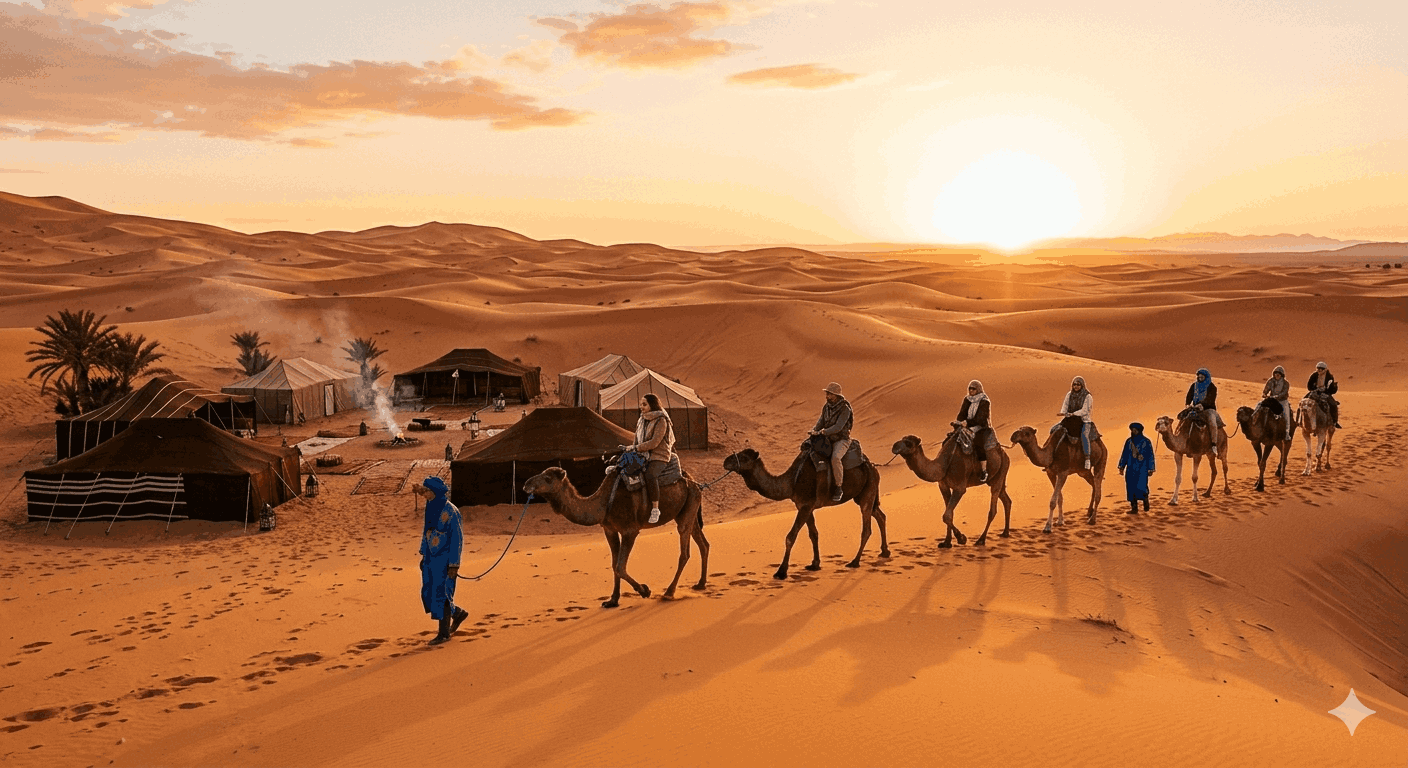
The "Slow Travel" movement has also found a natural home in the Moroccan landscape. Instead of rushing through seven cities in ten days, the 2026 itinerary encourages travelers to spend more time in fewer locations. This might mean a four-day retreat in the High Atlas Mountains to engage in "Berber Homestays," where guests share a tagine and learn traditional weaving techniques, or a multi-day trek into the Sahara to experience the "infinite silence" of the dunes. This approach reduces "travel fatigue" and fosters a deeper connection with the local people. By choosing to visiter maroc with a focus on depth over breadth, you contribute to a more sustainable tourism model that respects the cultural and environmental integrity of the regions you explore.
Conclusion and Your Strategic Call to Action
To visiter maroc in 2026 is to witness a nation at the peak of its cultural and infrastructural revival. The successful execution of the "Light in Action" roadmap has created a destination that is safe, accessible, and deeply rewarding for every type of traveler. From the record-breaking tourism receipts of early 2026 to the world-renowned hospitality of its imperial cities, Morocco has proven that it is more than just a place to see; it is a place to experience with all five senses. The systems are robust, the luxury is unparalleled, and the traditional soul of the kingdom remains as vibrant as ever.
Are you ready to be part of Morocco's historic 2026 season? The first step is to identify your primary interest, whether it is the high-end glamour of the Marrakech palaces, the rugged adventure of the Atlas peaks, or the coastal charm of Essaouira. Once your intent is clear, leverage the new visitmorocco.com portal and the simplified e-visa system to begin your planning. Don't wait for the 2030 crowds to arrive; book your journey today to enjoy the "Sweet Spot" of Moroccan tourism. The Kingdom of Light is ready to welcome you with open arms and a glass of mint tea; start your adventure now and discover why Morocco remains the heart of North African travel.